深入浅出大模型智能体经典范式:ReAct
1 ReAct定义
ReAct 概念由 Shunyu Yao 等人于 2022 年提出。在它诞生之前,大模型的应用方法主要分为两类:
- 纯思考型(如思维链 Chain-of-Thought):引导模型进行复杂的逻辑推理,但无法与外部世界交互,容易产生事实幻觉。
- 纯行动型:模型直接输出要执行的动作,但缺乏规划和纠错能力。
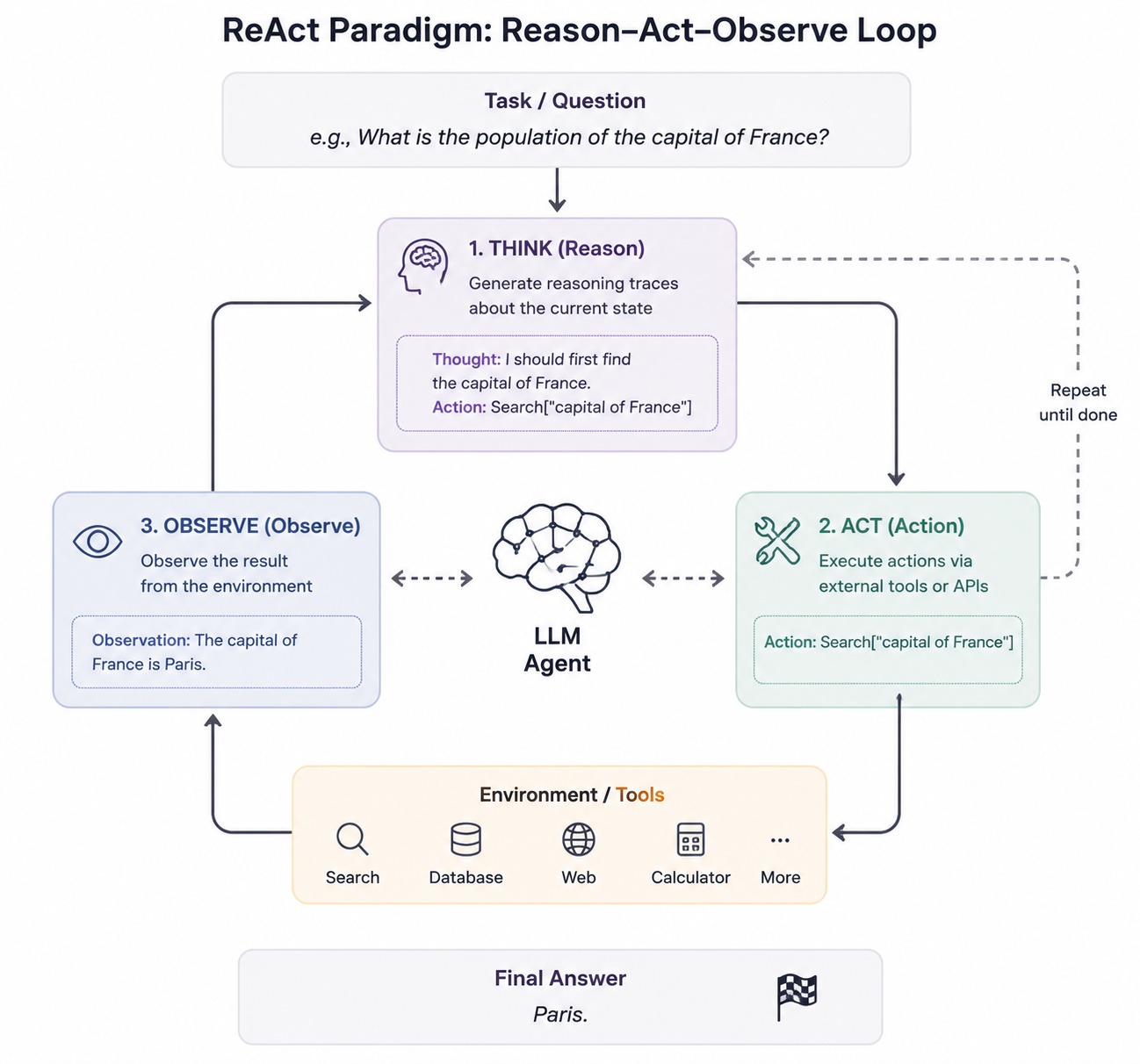
ReAct 的巧妙之处在于将“推理”(Reasoning)与“行动”(Acting)显式地结合起来,形成了一个“思考 $\rightarrow$ 行动 $\rightarrow$ 观察”的协同循环。
- Thought (思考):智能体的“内心独白”。分析当前情况、拆解任务、制定下一步计划,或反思上一步的结果。
- Action (行动):智能体决定采取的具体动作,通常是调用外部工具(如搜索引擎、计算器、API 等)。
- Observation (观察):执行 Action 后从外部环境或工具返回的结果,作为新的事实依据输入给模型。
通过这种循环,推理使得行动更具目的性,而行动的观察结果又反过来修正推理,从而完美弥补了 LLM 缺乏实时信息和易产生幻觉的短板。
2 ReAct 的核心设计与实现
要从零构建一个 ReAct 智能体,主要包含三个核心组件:提示词模板、工具执行器和核心循环。
2.1 提示词模板设计(System Prompt)
提示词是强制模型进行结构化输出的基石。我们需要定义好规范,让模型知道自己有什么工具,以及必须按照 Thought、Action、Observation 的格式推进。
请注意,你是一个有能力调用外部工具的智能助手。

可用工具如下:
{tools}

请严格按照以下格式进行回应:
Thought: 你的思考过程,用于分析问题、拆解任务和规划下一步行动。
Action: 你决定采取的行动,必须是以下格式之一:
- tool_name[tool_input] : 调用一个可用工具。
- Finish[最终答案] : 当你收集到足够的信息,能够回答用户的最终问题时使用。

现在,请开始解决以下问题:
Question: {question}
History: {history}
2.2 工具执行器(Tool Executor)
工具是智能体的“手和脚”。以网页搜索工具(如 SerpApi)为例,工具需要包含名称、描述(供 LLM 判断何时调用)和执行逻辑。
class ToolExecutor:
    def __init__(self):
        self.tools = {}

    def register_tool(self, name, description, func):
        self.tools[name] = {"description": description, "func": func}

    def get_available_tools(self):
        return "\n".join([f"- {name}: {info['description']}" for name, info in self.tools.items()])

    def execute(self, name, tool_input):
        if name in self.tools:
            return self.tools[name]["func"](tool_input)
        return f"错误: 未找到名为 {name} 的工具。"
2.3 核心循环(Execution Loop)
智能体的主体是一个 while 循环。它不断把当前历史记录喂给 LLM,解析模型的输出,如果遇到 Action 就去执行工具,并将 Observation 追加到历史中;如果捕获到 Finish,则退出循环输出答案。
import re

class ReActAgent:
    def __init__(self, llm_client, tool_executor, max_steps=5):
        self.llm_client = llm_client
        self.tool_executor = tool_executor
        self.max_steps = max_steps

    def run(self, question):
        history = []
        current_step = 0

        while current_step < self.max_steps:
            current_step += 1

            # 1. 组装 Prompt
            tools_desc = self.tool_executor.get_available_tools()
            history_str = "\n".join(history)
            prompt = REACT_PROMPT_TEMPLATE.format(
                tools=tools_desc, question=question, history=history_str
            )

            # 2. 调用 LLM 思考
            response = self.llm_client.think([{"role": "user", "content": prompt}])

            # 3. 解析 Thought 和 Action
            thought, action = self._parse_output(response)
            history.append(f"Thought: {thought}\nAction: {action}")

            # 4. 判断是否结束
            if "Finish" in action:
                final_answer = re.search(r"Finish\[(.*)\]", action).group(1)
                return final_answer

            # 5. 执行工具并获取观察结果
            tool_name, tool_input = self._parse_action(action)
            observation = self.tool_executor.execute(tool_name, tool_input)

            # 6. 将结果带入下一次循环
            history.append(f"Observation: {observation}")
3 ReAct 的优势与局限性
3.1 优势:
- 高可解释性:智能体的每一步思考(Thought)和工具调用(Action)都清晰可见,极易于人类开发者调试和排查错误。
- 准确性高:通过引入外部真实世界的数据(Observation),大幅降低了模型的幻觉率。
3.2 局限与工程挑战:
- 令牌(Token)消耗大:由于每一步都需要把前面的所有对话历史、思考和观察结果重新作为上下文发给模型,导致 Token 消耗呈滚雪球式增长。
- 易陷入死循环:若大模型对工具返回的错误 Observation 缺乏反思能力,可能会换着法子反复调用同一个错误工具,导致任务失败。为了防止这种情况,在工程实现上通常必须设置
max_steps作为安全阀。
4 总结
ReAct 范式通过精妙的提示词设计,将 LLM 的内部推理与外部世界的动作执行完美连接。虽然在面对超级复杂的长文本任务时,它可能会显得有些“势单力薄”(后续衍生出了如 Plan-and-Solve、Reflection 等更高级的范式),但作为智能体架构的基石,理解并亲手实现一次 ReAct,是每一位智能体应用创造者的必经之路。